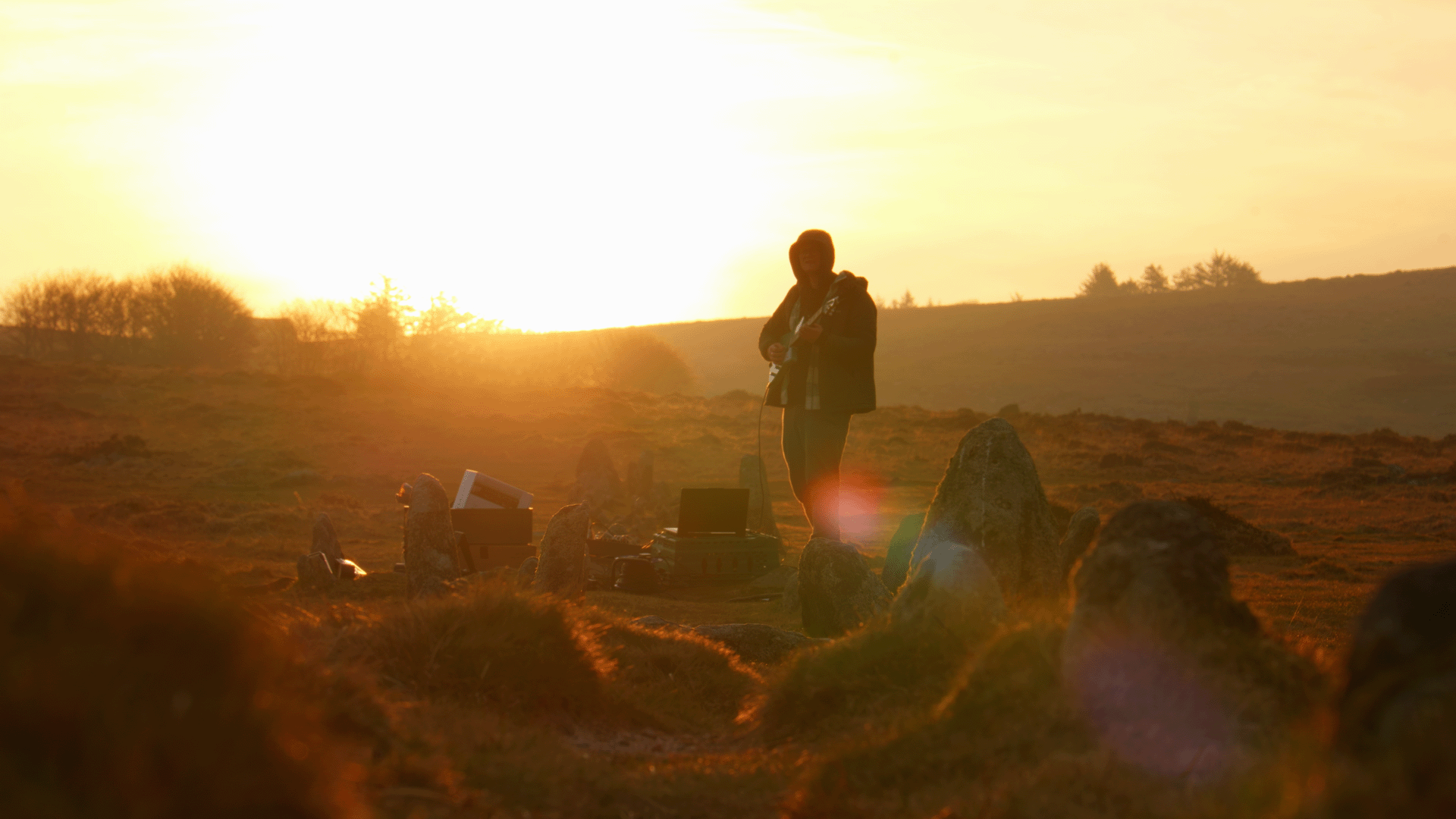
Trepanner explores the modern human through the lens of pre-history, spatial musiC and art.
About
We live in a time of loss, not abundance. 1
Loss of habitat, biodiversity, equality, agency, social infrastructure, and belief. Not belief in a god or higher powers but belief that things can get better. 2
In this strange epoch of collapse and content, this post-natural world 3, I fear we are losing what it means to be human. Our behaviours are nudged by alogrithims 4, our creativity usurped by AI 5, our communities fractured by social media 6, our diets hyperprocessed and engineered 7, our bodies extended by smart devices.
Truthfully though, the same sentence can be constructed as: Our behaviours, creativity, communities, diets and bodies have been productised. but it wasn’t always the case. For the vast majority of our species, capitalism didn’t exist. The role that art, food, community, feelings played was different.
As Trepanner, we look back to long-form human experiences from pre-history to explore what it means to be human today and what it could mean to be human tomorrow. Our work explores altered states, kinaesthetics and spirituality through spatial music, psychogeography, creative technology and research.
Our first project explores these ideas through the lens of cave art: Temenos
Our ancestors made art in caves for at least 40,000 years. These were biologically, neurologically, creatively identical to us. They were us and we are them and, for tens of thousands of years, they ventured into the dark to make art and symbols. We consider this a foundational human experience and in this project we return to the cave - both literally and creatively, to explore why they were so important and what role they play in being human.
This is not to romanticise primivitism; cave art required the making of pigments, tallow lamps, and scaffolding - complex creative and engineering technologies.
Their canvas like walls perfect for pigment or etching, their ability to hieghten or deprive the senses, their otherworldliness, their pyschogeographical mirroring of the neurological processes involved in altered states, their utility to communicate across vast distances of time.
Given the permanent scars modernity has given our world - microplastics, forever chemicals, cables in the bedrock, devastated biodiversity, pollution and so on, we are particularly interested in the abilty to communicate over such distances. In Temenos, we return to ‘the entrails of the underworld’, to the geological capilliries threaded in the mantle, to the dark, echoeing chambers of the world and, by doing so, we venture into the depths of ourselves to remember what it is to be human.
1 There is so much overwhelming evidence but a good start is: https://royalsociety.org/news-resources/projects/biodiversity/where-is-most-biodiversity-loss-happening-and-why/.
2 Again, sad to say there are so many sources for this, across unhappiness, climate anxiety, inequality and so on, here is an article on the effects in the UK: https://www.theguardian.com/society/2024/mar/20/world-happiness-report-sounds-alarm-about-the-welfare-of-britains-young-people
3 See The Institute for Post Natural Studies https://www.instituteforpostnaturalstudies.org/
4 Lewandowsky S, Robertson RE, DiResta R. Challenges in Understanding Human-Algorithm Entanglement During Online Information Consumption. Perspect Psychol Sci. 2024 Sep;19(5):758-766.
5 Faiella, Angela, et al. “Am I Still Creative? The Effect of Artificial Intelligence on Creative Self-Beliefs.” Journal of Creative Behavior, vol. 59, 2025, article e70011, https://doi.org/10.1002/jocb.70011 .
6 Barnes, Talia, and Luke Hallam. “How Social Media Destroys the Things That Matter Most.” Persuasion Community, 9 Sept. 2022, https://www.persuasion.community/p/how-social-media-destroys-the-things
7 Mottis G, Kandasamey P, Peleg-Raibstein D. The consequences of ultra-processed foods on brain development during prenatal, adolescent and adult stages. Front Public Health. 2025 Jun 23